Mechanical, electrical, and plumbing systems are essential to the successful operation of every modern building. However, these systems often occupy the same limited spaces above ceilings, inside service shafts, below floors, and within plant rooms. Without proper coordination, clashes between MEP services and structural or architectural elements can create costly delays, rework, and operational problems.
For contractors, developers, consultants, and industrial facility owners, effective MEP coordination is therefore not simply a design-stage activity. It is a critical project management process that directly affects construction quality, cost control, installation speed, and long-term system performance.
Working with an experienced provider of MEP engineering services UAE helps project teams identify technical conflicts early, improve collaboration, and execute complex installations more efficiently.
What Is MEP Coordination?
MEP coordination is the process of integrating mechanical, electrical, plumbing, fire protection, architectural, structural, and other building systems into a single coordinated construction plan.
The process ensures that every system can be installed within the available space without interfering with other services or building components.
For example, HVAC ducts may need to share ceiling space with cable trays, chilled-water pipes, fire-fighting lines, drainage systems, and structural beams. If these elements are designed independently, clashes can easily occur during installation.
Professional MEP coordination services Dubai bring these systems together before site execution begins. Engineers review layouts, installation requirements, access clearances, maintenance zones, equipment specifications, and construction sequences to produce coordinated drawings that can be followed accurately on site.
Why MEP Coordination Is Essential in Construction Projects
Modern buildings and industrial facilities rely on increasingly complex technical systems. As projects become more advanced, the space available for services often becomes more restricted.
Poor coordination can result in:
● Ducts conflicting with structural beams
● Pipes crossing electrical cable trays
● Equipment installed without sufficient maintenance access
● Incorrect ceiling heights
● Repeated drawing revisions
● Delayed inspections and approvals
● Material wastage
● Unplanned site modifications
● Reduced system efficiency
These issues are especially common when multiple subcontractors work from separate drawings without a unified coordination process.
A structured approach to MEP design and consultancy helps ensure that all project stakeholders work from accurate, approved, and coordinated information.
1. Reduces Installation Clashes
One of the main benefits of proper MEP coordination is the early identification of technical clashes.
A clash occurs when two or more building elements occupy the same physical space. Common examples include an air-conditioning duct passing through a concrete beam or a drainage pipe blocking access to an electrical panel.
When clashes are discovered during construction, the project team may need to stop work, redesign the affected area, obtain approvals, relocate installed services, or replace materials.
These corrections can significantly increase costs and disrupt the construction schedule.
Through coordinated drawings and digital modelling, engineers can identify these conflicts before materials are installed. The systems can then be repositioned while the project is still in the planning or design stage, when changes are faster and less expensive.
2. Minimises Rework and Material Waste
Rework is one of the most common causes of reduced productivity in construction projects.
When services are installed incorrectly or conflict with other systems, completed work may need to be removed and installed again. This creates additional labour costs, material waste, equipment downtime, and supervision requirements.
Effective MEP coordination provides installation teams with clear routing, elevations, dimensions, and equipment locations. This reduces uncertainty and helps technicians complete the work correctly the first time.
For large industrial projects, even minor coordination improvements can create substantial savings because the systems may include extensive ductwork, power distribution, utility piping, automation equipment, and specialised machinery connections.
Reliable industrial MEP solutions focus on practical installation requirements as well as engineering performance.
3. Improves Construction Scheduling
MEP installations are closely connected to architectural, civil, and structural activities. If one system is delayed, several other activities may also be affected.
For example, ceiling work cannot be completed until the ductwork, pipes, cable trays, fire-fighting lines, insulation, testing, and inspections above the ceiling are finished.
Proper coordination allows project managers to plan installation sequences more accurately. Each trade understands when and where its work must be completed, reducing interference between subcontractors.
This helps improve workflow across activities such as:
● Equipment foundation preparation
● Pipe and duct installation
● Electrical containment works
● Machinery placement
● Ceiling closure
● Testing and commissioning
● Authority inspections
● Final handover
Clear sequencing also helps prevent overcrowding in work areas, improving both productivity and safety.
4. Supports Better Cost Control
Uncoordinated MEP work often leads to unexpected expenses. These may include overtime, replacement materials, additional supports, equipment relocation, temporary works, design revisions, and delayed project completion.
A coordinated MEP strategy helps contractors prepare more accurate quantities, identify installation requirements, and plan manpower more effectively.
It also supports better procurement decisions. When coordinated drawings are completed early, materials can be ordered according to verified dimensions and approved specifications rather than preliminary assumptions.
This is particularly important for long-lead items such as:
● Air-handling units
● Chillers and pumps
● Electrical panels
● Control systems
● Fire pumps
● Specialised valves
● Industrial ventilation equipment
● Machinery and production-line components
Early coordination reduces the risk of ordering equipment that does not fit the allocated space or meet the final connection requirements.
5. Improves Communication Between Project Teams
Construction projects involve many stakeholders, including clients, architects, consultants, main contractors, MEP contractors, equipment suppliers, facility managers, and government authorities.
Without a proper coordination structure, different teams may work with outdated drawings or conflicting information.
Professional MEP coordination creates a central technical reference for project execution. Coordination meetings, shop drawings, builder’s work drawings, equipment schedules, and installation details allow all parties to review the same information.
This improves decision-making and reduces misunderstandings between disciplines.
An experienced provider of MEP engineering services UAE can also coordinate with equipment suppliers and specialist contractors to ensure that power
requirements, drainage points, ventilation capacity, utility connections, and access requirements are fully considered.
6. Optimises Available Space
Space management is a major challenge in commercial, industrial, and infrastructure projects.
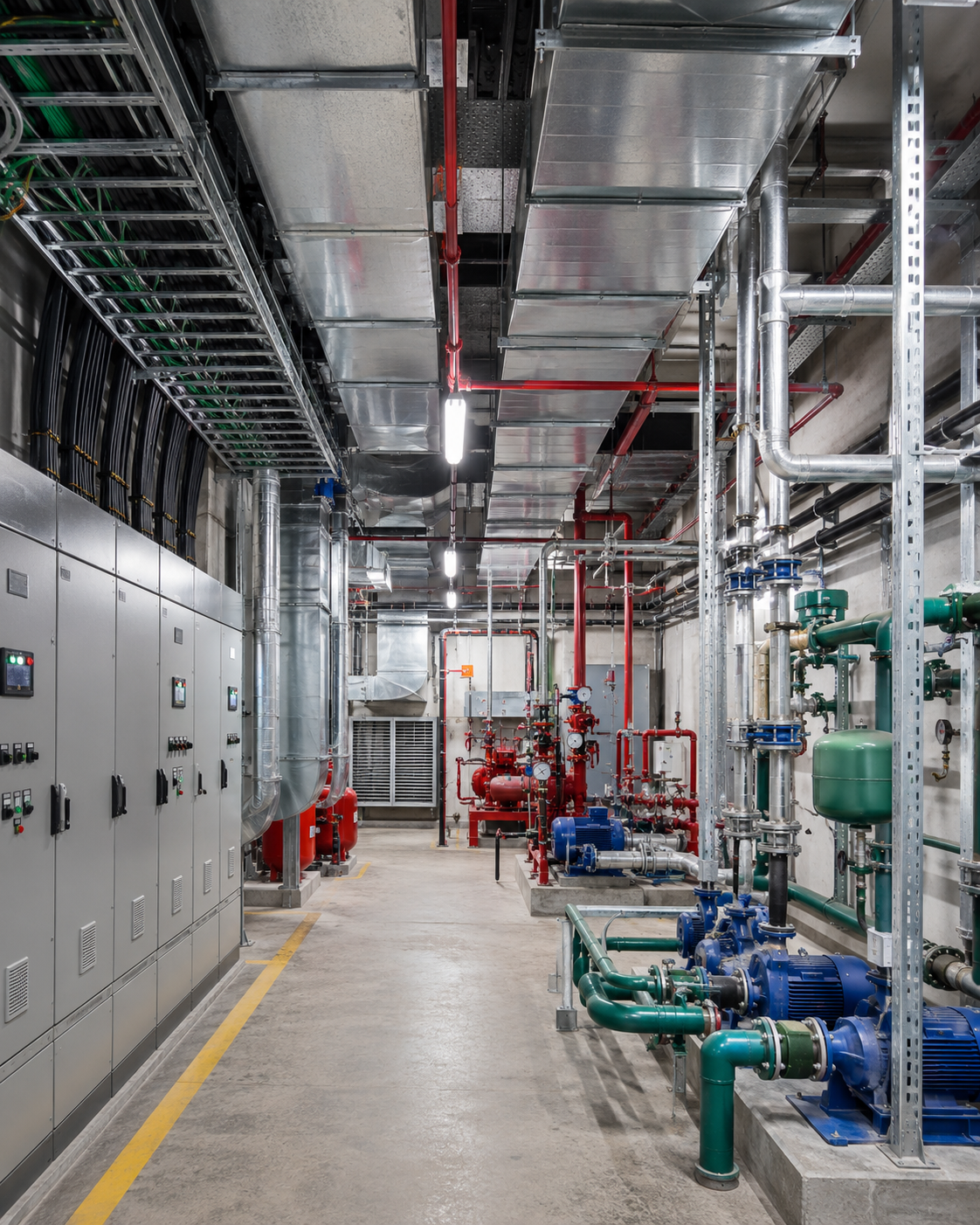
Plant rooms, ceiling voids, service corridors, risers, and utility areas must accommodate multiple systems while remaining accessible for inspection and maintenance.
Poorly planned service layouts can reduce ceiling heights, block access panels, complicate equipment replacement, or create unsafe maintenance conditions.
MEP coordination helps engineers organise systems according to size, function, installation sequence, and maintenance priority.
For example, large air ducts may be positioned first, followed by gravity drainage lines, pressurised pipes, cable trays, and smaller services. This hierarchy helps ensure that every system can be installed efficiently within the available space.
7. Enhances Safety During Installation
A coordinated work environment is generally safer than an unplanned one.
When installation routes and work sequences are clearly defined, contractors can reduce unnecessary cutting, temporary modifications, work at height, and congestion between different teams.
Coordination also helps maintain required safety clearances around electrical panels, rotating machinery, pumps, access doors, fire-fighting equipment, and emergency systems.
For industrial facilities, coordinated engineering is especially important because MEP systems may interact with process equipment, automation panels, compressed air systems, production utilities, and heavy machinery.
Well-planned industrial MEP solutions support safe installation, operation, and maintenance throughout the facility lifecycle.
8. Improves System Performance
MEP coordination is not only about preventing physical clashes. It also helps protect the performance of the systems.
Poor routing can increase pressure losses, reduce airflow, create drainage problems, or make cable installations unnecessarily long. Incorrect equipment positioning may also affect ventilation, heat rejection, maintenance access, and noise control.
Through effective MEP design and consultancy, engineers can coordinate systems while maintaining the required technical standards.
This may include:
● Correct duct and pipe sizing
● Appropriate equipment clearances
● Efficient service routes
● Proper drainage slopes
● Balanced air distribution
● Adequate electrical access
● Suitable ventilation around equipment
● Accurate control and sensor locations
The result is a more efficient installation that performs according to the design intent.
9. Simplifies Testing and Commissioning
Testing and commissioning confirm that MEP systems are installed correctly and operate as required.
However, commissioning can be delayed when valves, dampers, sensors, test points, panels, filters, or access doors are difficult to reach.
Proper coordination considers commissioning requirements from the beginning of the project. Engineers ensure that inspection points remain accessible and that equipment can be tested without removing other services.
Coordinated documentation also supports system verification by providing clear references for equipment locations, service routes, control connections, and approved specifications.
This helps the project team identify and resolve issues more efficiently before final handover.
10. Supports Long-Term Facility Maintenance
The value of MEP coordination continues after construction is completed.
Facility management teams need safe access to equipment for cleaning, inspection, repair, and replacement. If services are installed too closely together or maintenance zones are blocked, even routine work can become difficult and expensive.
Coordinated MEP layouts consider the complete lifecycle of the facility. They allow sufficient space for technicians to access filters, motors, valves, electrical components, control panels, and other maintainable items.
Accurate as-built drawings created from coordinated construction information also help facility teams understand how systems are connected and where services are located.
The Role of BIM in MEP Coordination
Building Information Modelling has become an important tool in modern MEP coordination.
BIM allows engineers to create and review a three-dimensional digital model containing architectural, structural, and MEP elements. The model can be used to identify clashes, analyse clearances, plan installation sequences, and communicate technical information more clearly.
Compared with reviewing separate two-dimensional drawings, BIM provides a more complete understanding of how systems interact within the building.
However, technology alone does not guarantee successful coordination. The process still requires experienced engineers who understand construction methods, equipment requirements, installation tolerances, authority regulations, and site conditions.
Effective coordination combines digital tools with practical engineering knowledge.
MEP Coordination for Industrial Facilities
Industrial projects require a more specialised coordination approach than standard commercial buildings.
Factories, food-processing facilities, bottling plants, poultry farms, warehouses, and production facilities may include process equipment, specialised ventilation, automation systems, machinery power supplies, compressed air, water treatment, fire protection, drainage, and temperature-control systems.
These services must be coordinated with production layouts and operational requirements.
Industrial MEP coordination may involve:
● Machinery installation requirements
● Equipment foundations and openings
● Process utility connections
● Industrial ventilation systems
● Electrical load distribution
● Control-panel integration
● Automation and sensor systems
● Hygiene and wash-down requirements
● Fire and life-safety systems
● Maintenance and equipment replacement access
A contractor experienced in industrial MEP solutions can coordinate building services with production equipment to reduce installation risks and improve operational reliability.
Key Stages of Effective MEP Coordination
A successful MEP coordination process typically includes several stages.
Design Review
The engineering team reviews architectural, structural, and MEP designs to identify missing information, technical inconsistencies, and potential coordination risks.
Equipment and Service Verification
Equipment dimensions, connection points, electrical requirements, access zones, and maintenance clearances are verified.
Clash Detection
Digital models or coordinated drawings are reviewed to identify conflicts between building systems.
Coordination Meetings
Designers, contractors, consultants, and specialist suppliers discuss clashes and agree on practical solutions.
Shop Drawing Development
Detailed construction drawings are prepared with accurate routes, levels, dimensions, supports, and installation details.
Site Verification
The coordinated design is checked against actual site conditions before installation begins.
As-Built Documentation
Final drawings are updated to reflect the completed installation and support future facility maintenance.
Choosing the Right MEP Coordination Partner in the UAE
MEP coordination requires more than drawing preparation. It requires technical expertise, site experience, communication, and an understanding of how different building systems must work together.
When selecting a provider of MEP engineering services UAE, project owners and contractors should consider:
● Experience with similar projects and industries
● Knowledge of UAE construction requirements
● Ability to coordinate multiple disciplines
● Practical site-execution experience
● BIM and technical drawing capabilities
● Understanding of machinery and equipment installation
● Strong quality and safety procedures
● Testing and commissioning support
● Facility-maintenance knowledge
The right engineering partner should be able to identify potential problems early and provide solutions that are practical, compliant, and suitable for construction.
Improve Project Efficiency with JBT World
Proper MEP coordination is one of the most effective ways to reduce construction delays, minimise rework, control costs, and improve installation quality.
By coordinating mechanical, electrical, plumbing, structural, architectural, and industrial systems before execution, project teams can make better decisions and avoid costly site conflicts.
JBT Building Contracting LLC provides professional MEP engineering services UAE, including MEP coordination services Dubai, MEP design and consultancy, industrial installation support, system integration, and facility maintenance.
Our team works closely with clients, consultants, contractors, and equipment suppliers to deliver practical, coordinated, and reliable MEP solutions for commercial and industrial projects.
Contact JBT World to discuss your project requirements and discover how professional MEP coordination can improve construction efficiency, system performance, and long-term operational reliability.